10 Essential Kitchen Tools Every Home Cook Needs (And Why)
Build your perfect kitchen with these 10 essential tools. Learn which equipment professionals rely on and how to choose quality items on any budget.
Why the Right Tools Matter
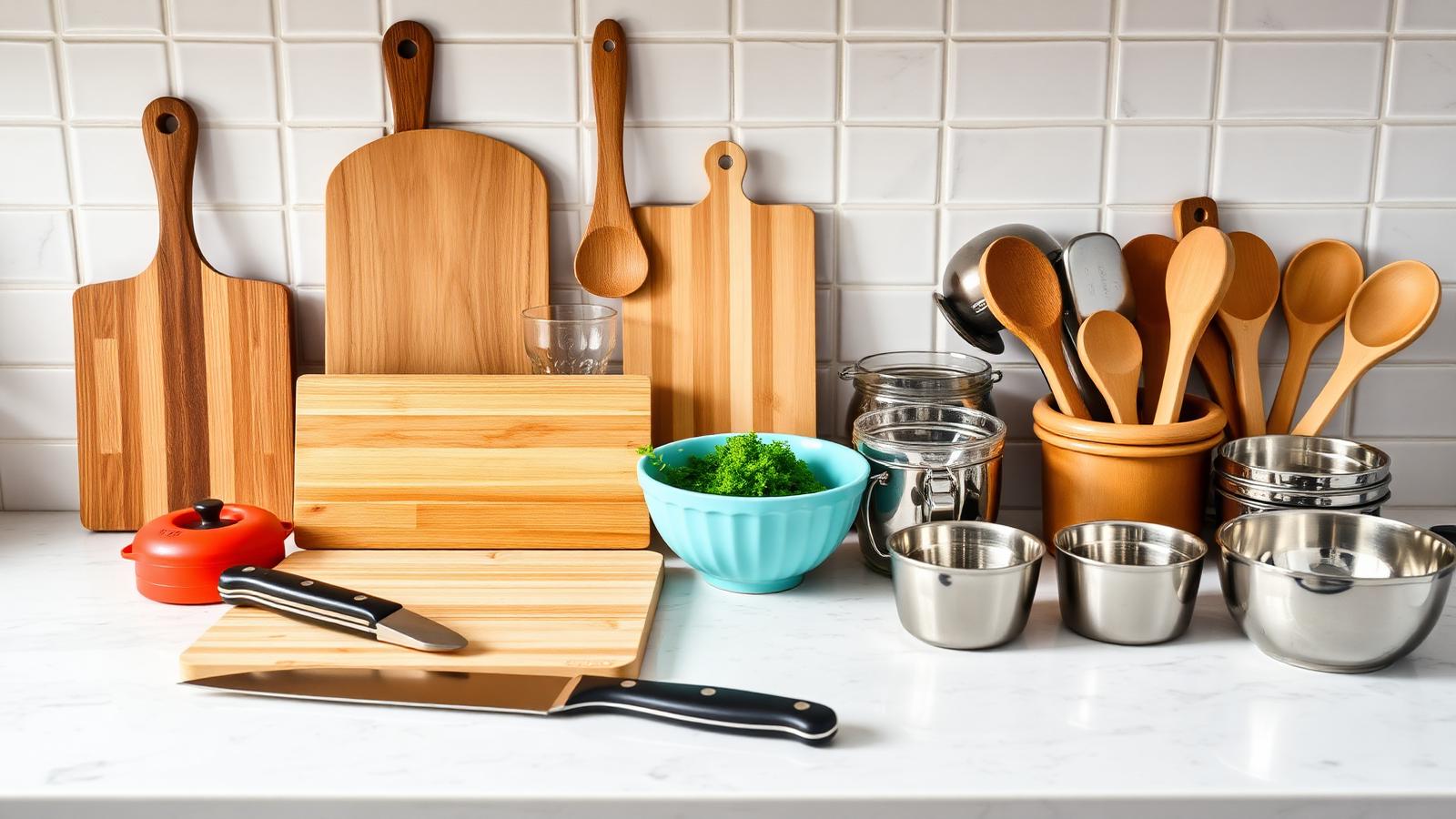
Quality kitchen tools don't just make cooking easier—they make it more enjoyable and more successful. The right knife cuts effortlessly, the right pan heats evenly, and the right measuring tools ensure consistent results. While you don't need a kitchen full of gadgets, having these 10 essentials will set you up for success in nearly any recipe.
These aren't expensive specialty items. They're the workhorses of the kitchen that you'll use constantly. Investing in quality versions of these tools pays off quickly in better cooking experiences and longer-lasting equipment.
1. Chef's Knife (8-Inch)
A good chef's knife is the single most important tool in your kitchen. An 8-inch chef's knife handles about 90% of cutting tasks: chopping vegetables, slicing meat, mincing herbs, and even breaking down poultry. The blade should feel comfortable and balanced in your hand.
Budget option ($30-50): Victorinox Fibrox Pro is a favorite in professional kitchens for its sharp blade and comfortable grip at an affordable price.
Mid-range ($80-150): Wüsthof Classic or Zwilling Pro offer excellent edge retention and balance. These knives will last decades with proper care.
Investment ($200+): Japanese-style knives like Shun or Global feature harder steel that stays sharper longer but requires more careful maintenance.
Care tips: Hand wash and dry immediately, use a honing steel regularly, and get professional sharpening annually. Never put quality knives in the dishwasher.
2. Cutting Board
A large, stable cutting board protects your knives and counters while providing a safe surface for food prep. You need at least two: one for produce and one for raw meat to prevent cross-contamination.
Wood cutting boards are gentle on knife edges and naturally antimicrobial when properly maintained. Look for edge-grain boards at least 12x18 inches made from maple, walnut, or bamboo. Season with mineral oil monthly.
Plastic cutting boards are dishwasher safe and inexpensive but dull knives faster. They're perfect for raw meat since you can sanitize them at high temperatures. Replace when they develop deep grooves that harbor bacteria.
Budget option ($20-40): Large plastic boards from OXO or Farberware for everyday use.
Investment ($60-150): A beautiful hardwood board from John Boos or Catskill Craftsmen that doubles as a serving piece.
3. 10-12 Inch Stainless Steel Skillet
A stainless steel skillet is essential for searing, sautéing, and deglazing. Unlike nonstick pans, stainless steel can withstand high heat, go in the oven, and develop fond (the flavorful browned bits) that make pan sauces incredible.
Look for tri-ply or 5-ply construction with aluminum or copper core for even heating. The pan should feel heavy and substantial. A comfortable, oven-safe handle is crucial since you'll often move the pan from stovetop to oven.
Budget option ($50-80): Tramontina Tri-Ply Clad offers restaurant-quality performance at a fraction of the cost of premium brands.
Investment ($150-300): All-Clad D3 or D5 are lifetime purchases used in professional kitchens worldwide. They heat evenly, last forever, and can be refurbished.
Usage tip: Let the pan preheat properly, and don't move food too soon. When properly heated, food will release naturally when a good sear forms.
4. Cast Iron Skillet (10-12 Inch)
Cast iron retains heat exceptionally well and can go from stovetop to oven to grill. It's perfect for searing steaks, baking cornbread, roasting chicken, and even making desserts. With proper seasoning, cast iron develops a natural nonstick surface.
Budget option ($20-30): Lodge is the gold standard for cast iron. Their pre-seasoned skillets are ready to use out of the box.
Maintenance is simple: wash with hot water and a brush (soap is fine despite myths), dry thoroughly, and rub with a thin layer of oil after each use. Never soak cast iron or put it in the dishwasher.
If your seasoning gets damaged, you can always re-season the pan. Cast iron is virtually indestructible and can be passed down for generations.
5. Nonstick Skillet (10 Inch)
While not as versatile as stainless steel or cast iron, a nonstick pan is invaluable for eggs, delicate fish, and sticky foods. Modern nonstick coatings are safe when used properly—never heat empty and keep temperatures below 500°F.
Budget option ($20-40): T-fal or Calphalon nonstick pans are affordable and work well but need replacement every 2-3 years.
Mid-range ($60-100): Scanpan or Swiss Diamond feature more durable coatings that last 5+ years.
Care tips: Use silicone, wood, or plastic utensils only. Hand wash with soft sponges. When the coating visibly degrades, replace the pan—scratched nonstick coatings don't perform well.
6. Large Pot (8-Quart)
A large pot is essential for boiling pasta, making soup, blanching vegetables, and cooking for a crowd. Stainless steel is ideal—it's durable, non-reactive, and dishwasher safe. Look for a heavy bottom to prevent scorching and sturdy handles for safe lifting when full.
Budget option ($50-80): Cuisinart or Farberware offer reliable large pots at reasonable prices.
Investment ($150-250): All-Clad or Le Creuset stainless steel pots distribute heat beautifully and will last a lifetime.
Bonus: Consider a pasta insert if you cook pasta frequently—it makes draining effortless and allows you to reuse the water for multiple batches.
7. Instant-Read Thermometer
Stop guessing if your food is done. An instant-read thermometer ensures perfectly cooked meat every time and prevents both undercooking (unsafe) and overcooking (dry and disappointing). This tool transforms your cooking confidence.
Budget option ($15-25): ThermoPro or Lavatools are accurate and fast, reading temperatures in 3-4 seconds.
Premium option ($80-100): Thermapen ONE reads in under 1 second and is waterproof and incredibly durable. It's the thermometer professional chefs use.
Essential temperatures: Chicken 165°F, pork 145°F, medium-rare steak 130-135°F, fish 145°F, bread done 190-200°F.
8. Mixing Bowls (Set of 3-5)
You can never have too many mixing bowls. They're used for prep, mixing, marinating, and serving. A nested set saves space and provides options for different tasks.
Stainless steel bowls are lightweight, durable, unbreakable, and dishwasher safe. They're perfect for whisking, mixing, and even double-boiler setups.
Glass bowls are microwave-safe and won't absorb odors or stains. They're ideal for marinating and mixing acidic ingredients.
Budget option ($20-30): Any restaurant supply store sells commercial-grade stainless bowls for a few dollars each. They'll last forever.
9. Measuring Cups and Spoons
Accurate measurements are critical in baking and ensure consistent results in all cooking. You need two types: dry measuring cups for flour, sugar, and solid ingredients, and liquid measuring cups for water, oil, and other liquids.
For dry ingredients, get a set of metal cups (1/4, 1/3, 1/2, 1 cup) that you can level off for precision. For liquids, get a glass or plastic cup with measurements marked on the side (2-cup and 4-cup sizes are most useful).
Measuring spoons (1/4 teaspoon through 1 tablespoon) are essential for spices, baking powder, vanilla, and other concentrated ingredients.
Budget-friendly: OXO makes excellent measuring tools at reasonable prices. Their Good Grips line features comfortable handles and clear markings.
10. Wooden Spoons and Silicone Spatulas
These humble utensils are kitchen workhorses. Wooden spoons are perfect for stirring, scraping, and mixing without scratching pots or pans. They don't conduct heat, so you won't burn your hand on a hot spoon.
Silicone spatulas are heat-resistant, flexible, and perfect for scraping bowls clean, folding ingredients, and cooking eggs or delicate foods. Get at least two: a large one for mixing and a small one for precision work.
Budget option ($10-20): Get a set of 3-4 wooden spoons and 2 silicone spatulas for under $20 total. Replace wooden spoons when they crack or stain excessively.
Quality matters: Look for one-piece silicone spatulas (not a silicone head attached to a plastic handle where food can get trapped) and hardwood spoons that feel smooth and comfortable.
Building Your Kitchen Over Time
You don't need to buy everything at once. Start with the chef's knife, cutting board, and one good pan. Add tools as you discover what you cook most often. Buying quality versions of these essentials is an investment in years of better cooking.
Avoid gadget clutter. That avocado slicer, garlic rocker, and banana hanger might seem useful, but they often just take up space. Master the essentials first—you'll be amazed what you can accomplish with just these 10 tools.
Take care of your tools and they'll take care of you. Hand wash knives, season cast iron, avoid high heat with nonstick, and store everything properly. Quality kitchen tools, properly maintained, will last decades and make every meal a pleasure to prepare.